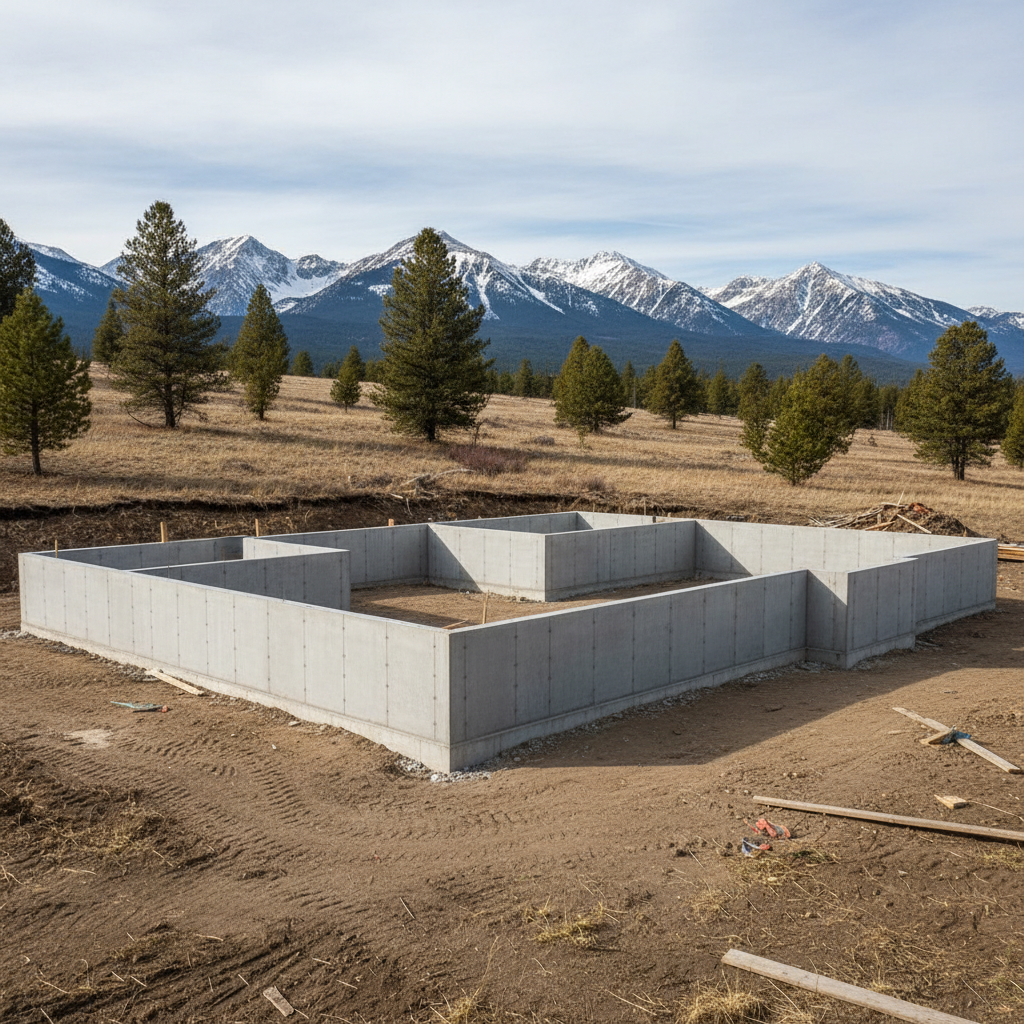
Water freezes in a puddle and bulges right up at the top. That same expansion happens in the ground beneath your home every winter, and it is the single biggest reason why pouring and caring for Concrete in Bigfork takes a little extra know-how. Up here in Bigfork, where our winters bring deep freezes and heavy snowpacks, your foundation deals with serious seasonal stress. If you do things right, Concrete will outlast just about everything else on your property. Miss a step with the weather window or skimp on protection, and you will be dealing with cracks before you know it.
Timing Your Pour Around Montana Weather
You cannot just pour Concrete whenever the mood strikes. We have got a narrow sweet spot for flatwork and structural pours in Bigfork. Spring can stay too wet and muddy, while late fall brings sudden overnight drops below freezing that ruin a cure before it even starts. Pacific Concrete generally looks for steady daytime temperatures staying above 50 degrees with no hard freeze predicted for at least a week.
Summer gives us the most predictable drying days, but the intense afternoon heat around Flathead Lake can dry out a fresh slab way too fast. If the water evaporates off the surface before the chemical curing process finishes, you end up with a weak, dusty top layer. Pacific Concrete always accounts for wind and sun exposure when scheduling Concrete pours during peak summer months.
The Frost Line Reality Check
Soil conditions across Bigfork mean dealing with glacial till, clay pockets, and moisture that loves to expand when the temperature plunges. The frost line in Northwest Montana runs deep, often pushing down several feet. If your footings are not dug deep enough past that freeze line, the shifting ground will push right up against your structure. That is what causes doors to stick in the winter and foundation walls to shear. Proper excavation depth and a solid gravel base for drainage are not optional extras up here; they are what keep your house square.
Protecting Your Investment Year-Round
Once your Concrete is cured, the job is not entirely over. Water is enemy number one. Make sure your gutters drain well away from any slabs or foundation walls. When autumn rolls around and you are cleaning out the yard, keep an eye on how melting snow pools near your garage apron or patio.
If you are using de-icing salts on your driveway or walkways during a heavy winter storm, be careful. Harsh chemicals can pit and spall the surface, especially on newer Concrete that has not fully seasoned. Stick to sand or pet-safe ice melt whenever possible, and give your flatwork a clean seal every few years to keep moisture from sinking into the pores.